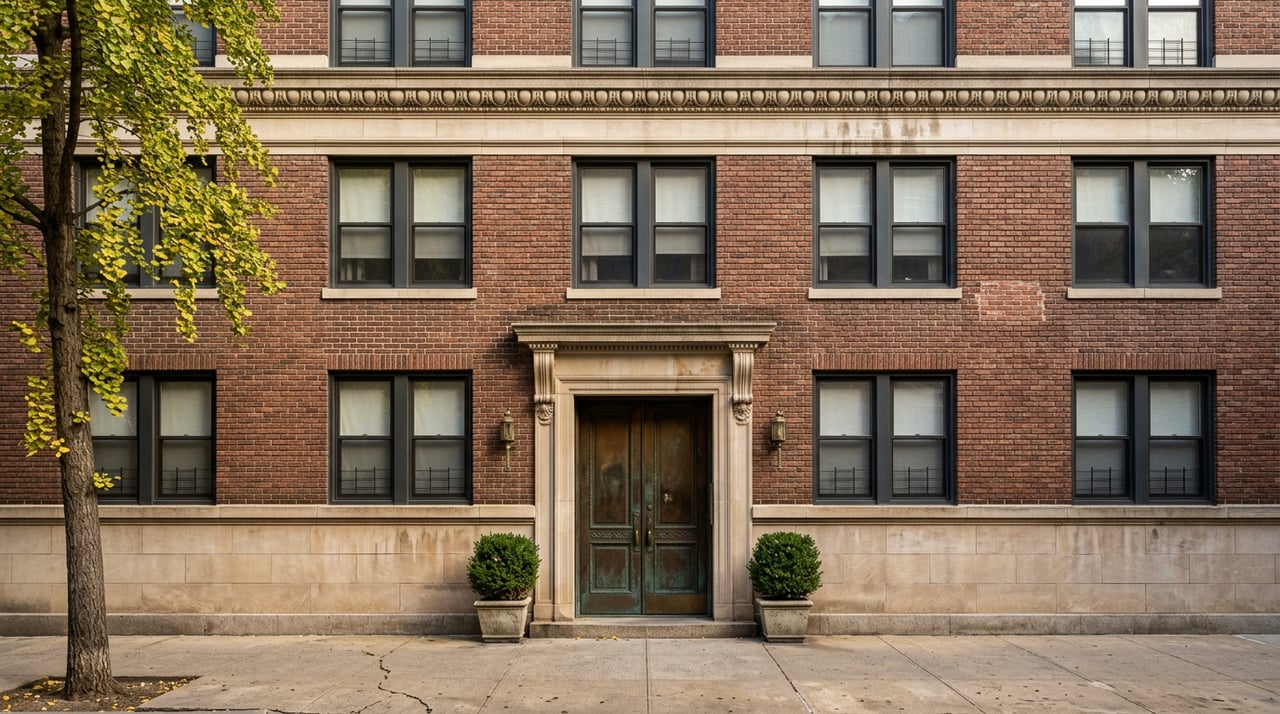
A buyer walking Central Park West this summer sees the same limestone facades, the same doormen, the same Zelkova canopy shading the side streets. What they do not see is that two apartments on the same block, at the same square footage, are now trading in two different markets. In the week of May 25, 2026, Upper West Side condominium price per square foot reached $1,752 on a two-month rolling median, up 11.2% year over year, while co-op pricing on the same neighborhood grid held at $1,194. That is a spread of roughly $558 per foot, or more than half a million dollars on a classic-six layout, for what a portal will show as one blended UWS number.
The thesis of this post is simple. The Upper West Side is no longer priced as a neighborhood in 2026. It is priced as two overlapping neighborhoods that share sidewalks, and the deciding variable is not the address but the ownership structure attached to the door.
The one median that is really two
PropertyShark's April 2026 data put the Upper West Side median condo sale at $2.4M, flat year over year, and the median co-op at $1.4M, up 22.4% from the prior year. A separate April read pegged the overall UWS median at $1.85M against a Manhattan median of $1.3M. Both are technically accurate. Neither describes what a buyer is actually shopping.
| Metric (UWS, spring 2026) | Condo | Co-op |
|---|---|---|
| Median sale price | $2.4M | $1.4M |
| PPSF, two-month rolling | ~$1,752 | ~$1,194 |
| YoY PPSF change | +11.2% | roughly flat |
| Typical minimum down | 10% | 20%, often higher |
| Contract-to-close window | 1–3 months | 3–4 months |
Those PPSF and median figures come from UrbanDigs contract and pricing data for the week of May 25, 2026 and from PropertyShark's April 2026 neighborhood report. The down-payment and closing-timeline norms track Corcoran's published buyer guidance, with the caveat that individual UWS co-op boards routinely stack their own requirements on top.
Why the condo line pulled away
The mechanism is supply, and it is measurable. Only 81 new development units launched across all of Manhattan in the first quarter of 2026, roughly 75% below the ten-year average. The Upper West Side captured a small share of that already-thin pipeline, layered onto the recent boutique-condo cohort of 200 Amsterdam, Waterline Square, One West End, and Claremont Hall. Everything else new is arriving one or two units at a time from small conversions.
Meanwhile the co-op stock along Central Park West and the Riverside Drive corridor behaves differently. The San Remo, the Beresford, the Majestic, the Kenilworth, the Eldorado, and the Dakota release inventory on their own timetable, often quietly. When a park-front line at the Dakota came to market in January 2026 for the first time in more than forty years, it closed at $24M through the Olshan Report's weekly luxury tally. That kind of trade is a signal about scarcity at the top of the co-op stack, not about the median co-op experience one block west on Amsterdam.
The result is asymmetric. Condo pricing responds to a citywide supply shortage that will not resolve on any near-term calendar. Co-op pricing responds to who happens to list this quarter, which building's board just tightened its financing rules, and how many buyers can meet a 25% to 30% down requirement with one to two years of post-closing liquidity in reserve.
What the same $2M buys on the same block
The condo–co-op split is not an abstraction at the closing table. Consider three parallel searches, each anchored at roughly $2M, each within a ten-minute walk of Lincoln Center.
- A two-bedroom in a boutique condo on Broadway trades near $1,750 per foot. The buyer clears in eight to ten weeks, keeps their LLC option open, and finances at 10% down if the building's offering plan allows.
- A comparable two-bedroom in a well-run prewar co-op on West End Avenue trades closer to $1,200 per foot. The same $2M buys noticeably more room, higher ceilings, and often a real dining space, at the cost of a board package, an interview, and a closing timeline that extends into the fall if you sign in June.
- A partially updated prewar co-op on a Riverside Drive line trades at a discount to both. The spread between the unrenovated ask and a renovated comparable in the same building is where 2026 buyers are finding real leverage, particularly on lines that have sat past 90 days. Two in five active Manhattan listings had crossed the 90-day mark by late May 2026, and unrenovated co-ops make up a disproportionate share of that pool.
The through-line is that "Upper West Side at $2M" is not one search. It is three, and the ownership structure sets the terms before the address does.
The friction that surfaces in a live transaction
Buyers who intend to compare a condo and a co-op in parallel usually discover the real cost of the co-op discount after they sign. A few pieces of that friction are worth pricing in before the search begins:
Down payment and reserves. Corcoran's buyer guidance describes condos as typically starting at 10% down and co-ops at 20%. On the Upper West Side, that 20% floor is often the beginning of the conversation. Several prewar boards along Central Park West and Riverside Drive now underwrite to 25% or 30% down with one to two years of maintenance and mortgage held in liquid reserve after closing.
Timeline. Corcoran estimates one to three months from signed contract to closing on a condo and three to four months on a co-op. In practice, a co-op board package assembled in June routinely closes after Labor Day. Sellers timing a move against a school calendar or a job start date should model the co-op path from the offer, not from the accepted contract.
Diligence documents. The New York State Attorney General's guidance is to review the full offering plan, building financial reports, and board minutes on any co-op or condo purchase. On the Upper West Side, the minutes matter more than the offering plan. Facade Local Law 11 cycles, elevator modernizations, and window replacements at prewar buildings can add assessments that reset the true carrying cost. A $1,200-per-foot co-op with a pending seven-figure facade project is not the deal the sticker suggests.
Use restrictions. Some Central Park West and Riverside Drive boards restrict pied-à-terre ownership, subletting, and LLC or trust title. Buyers who need any of those flexibilities are effectively steered into the condo market whether they planned to be or not, and the scarcity premium follows them there.
Reading UWS comps without the blended median
A disciplined approach for a 2026 buyer looks less like scanning a portal median and more like a short sequence of filters. In order:
- Separate condo comps from co-op comps before you look at a single price. A blended median mixes two markets that no longer move together.
- Anchor to PPSF, not headline price. On the Upper West Side, ceiling height, layout efficiency, and light change price per foot within a single building by hundreds of dollars, and total price will hide it.
- Pull the last 24 months of closed sales in the specific building, not the corridor. Elevated Advisement's recent UWS commentary makes the point plainly: the building and the specific apartment tell you almost everything, and the neighborhood average tells you very little.
- For any co-op, request the last two years of board minutes and the most recent audited financials before you fall in love. Assessments and refinancing terms show up there first.
- Cross-check active listings against the 90-day pile. Correctly priced homes are moving inside 65 days on the Upper West Side, down 22.6% in a month as of late May 2026. Listings that have sat longer are usually a pricing problem, not a market problem, and they are where negotiation lives.
FAQ
Is the Upper West Side condo premium likely to compress in the next twelve months? Not on current supply. With only 81 Manhattan-wide new development units launched in Q1 2026 and a thin UWS pipeline behind that, the scarcity that drove condo PPSF up 11.2% year over year is a structural condition rather than a cyclical one. A meaningful compression would require either a wave of new condo completions or a co-op inventory shortage severe enough to pull co-op PPSF up faster than condo PPSF. Neither is visible in the current data.
If I can qualify for either, why would I buy the co-op? Square footage, ceiling height, and prewar layout, mostly. At the median, a $1,400,000 co-op on the Upper West Side is a materially larger and often better-built apartment than a $1,400,000 condo, and the maintenance number typically includes property taxes and building utilities. The trade is process friction, board discretion, and less flexibility on use and title.
Does the same spread apply north of 96th Street? The direction is the same, the magnitude is not. The condo pipeline thins further north and the co-op stock shifts toward smaller prewar buildings and postwar structures, so PPSF at both ends compresses. Buyers priced out of the core Upper West Side often find that a co-op in the West 90s or low 100s delivers more apartment per dollar than either track further south, with the tradeoff that boards in that stretch enforce financing rules just as strictly.
If you are weighing a purchase on the Upper West Side this year and want a read on a specific building, line, or board's underwriting posture before you write an offer, Ryan Siciliano and the Rubin Team at Douglas Elliman are available to walk the comps with you. Let's Connect.