Thomas Straker is opening his first restaurant outside the United Kingdom on Grand Street. Cobi Levy is closing one restaurant and opening another in the same space. A twenty-six-year-old gallerist just took the second floor of a building on Wooster Street specifically because Donald Judd used to live nearby. And a Chelsea design gallery just expanded onto Crosby Street rather than into a new neighborhood entirely. None of this reads like SoHo getting discovered. It reads like SoHo getting reused, by people who already knew exactly where to stand.
That distinction matters if you live here. A neighborhood absorbing outside money for the first time behaves differently than one where the same handful of operators and dealers keep redeploying inside a four or five block radius they already understand. This fall, SoHo is doing the second thing. The clearest evidence sits less than a ten-minute walk from the corner of Prince and Wooster, the same corner where a restaurant called FOOD opened in the fall of 1971 and helped invent the idea of SoHo as somewhere worth going at all.
One Operator, Two Old Addresses
Start with Cobi Levy, because his fall is the tightest version of the pattern. Levy has run Little Prince, the French bistro at 199 Prince Street, and Lola Taverna at 210 Sixth Avenue for years. This fall he's closing Little Prince to open Romy, a fifty-seat neighborhood steakhouse built around raw bar plates and premium steaks, in the same 199 Prince Street space, with hours running from 5 p.m. to 1 a.m. and no bar seating at all. He isn't leaving the block. He's changing what's served on it.
Meanwhile his other old lease didn't sit empty for long. Croft Alley, a Los Angeles daytime cafe known for breakfast bowls and sandwiches, took over 210 Sixth Avenue, the old Lola Taverna space, as its first New York City location. Seventeen tables, a twelve-seat bar, an outdoor cafe area. It's a genuine outside brand arriving in SoHo for the first time, which sounds like the counter-example to the whole theory, though it took over an address Levy had vacated. That's a different kind of arrival than a brand scouting a cold block.
The Corner That Sat Empty for Six Years
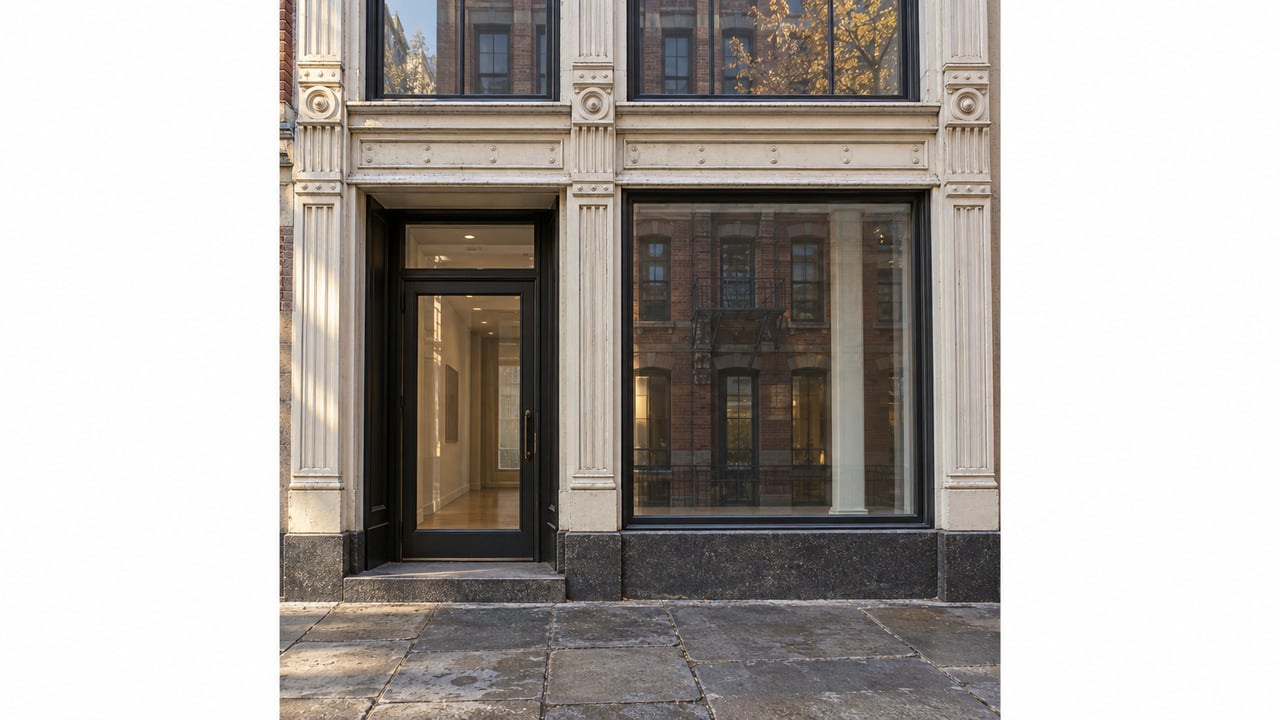
Straker's is the closest thing this season has to a genuine outsider, and even his story runs through someone else's old lease. Lucky Strike, the Keith McNally bistro at 59 Grand Street, closed in April 2020 and the address sat dormant for six years. Straker, the London chef behind the Notting Hill restaurant of the same name, signed the lease in 2025 and called it his new home in NYC. Community Board 2 approved the liquor license for the roughly 1,800-square-foot space in November 2025, with seating for 59 plus a bar and chef's counter for a total occupancy of 74. It's Straker's first restaurant outside the UK, which makes it real news. It's also, again, an old McNally address getting its first tenant in half a decade rather than a new building on a block that used to have nothing.
That's worth sitting with if you've walked past that storefront on Grand between Wooster and West Broadway and wondered why it never turned over. Six years is a long vacancy for a SoHo storefront that size. The address was finally filled by a chef with two million Instagram followers, not a random new concept testing the market.
Galleries Naming Their Reasons Out Loud
The gallery side of this fall is where the pattern stops being implicit and starts being stated on the record. Ben Ward Gallery opened September 17 on the second floor of 76 Wooster Street with a solo show of Titus McBeath's paintings called Speaking in Tongues. Ward, twenty-six, told The Art Newspaper he chose the block specifically because it sits close to where Donald Judd lived and where FOOD operated in the 1970s, aiming to show how younger artists' concerns "align with and diverge from the art historical canon." That's not incidental color. That's a twenty-something dealer explaining his lease decision by pointing at a fifty-year-old restaurant.
Two days later, on September 19, Ateliers Courbet, the design gallery that built its name in Chelsea, opened a second, more personal space at 53 Crosby Street dedicated to craft production and artist residencies, inaugurated with a presentation of Tokyo studio AtMa's sculptural chairs. Founder Melanie Courbet told The Art Newspaper she'd spent years looking for the "right space to house a more personal expression of the gallery ethos." Neither gallery is a new entrant to the city's art world. Both are established names choosing SoHo specifically, at the same moment, within four blocks of each other.
The Art Newspaper's framing of this moment is direct: SoHo's gallery stock is rising to the point where dealers are describing it as a real rival to Chelsea, the neighborhood that's held the largest concentration of commercial galleries in the city for decades. The same piece flags the obvious risk, that a wave of established names moving in on rising rents could eventually squeeze out the smaller, newer galleries that made the blocks interesting to begin with. For now, though, the arrivals are still the kind of operator who can afford to be choosy about history rather than the kind chasing whatever space is cheapest.
Retail Is Doing the Same Math
The pattern isn't confined to restaurants and galleries. Kiko Milano opened a SoHo flagship at 430 West Broadway with a five-day grand opening running September 3 through 7, putting an Italian beauty retailer's biggest New York bet on a block that's spent decades absorbing fashion before it absorbs anything else. La Salumeria's smaller-scale SoHo opening is another example of the pattern.
None of these are new categories for the neighborhood. SoHo has sold Italian food and European beauty products for a long time. What's notable is the timing of the dated openings described here. They land in the same six weeks, on streets that are walkable from each other in under fifteen minutes.
What Changes for Someone Who Already Lives Here
If your routine already runs through Prince, Wooster, Grand, Crosby, or Sixth Avenue between Houston and Canal, the practical shift this fall looks like this: a French bistro you might have had a reservation history with becomes a late-night steakhouse. A gallery walk that used to end at Wooster and Grand now has a reason to start there instead, with a debut show explicitly built around the same artists' names that show up in SoHo's own origin story. A daytime cafe from Los Angeles gives you a new breakfast option in a room that used to serve Greek small plates. None of it requires learning a new part of the city. It requires updating what you expect to find in rooms you already know.
The FOOD restaurant that opened at Prince and Wooster in 1971 lasted only three years under its founding artists before new owners took it over and eventually converted the address into retail. SoHo's history is full of addresses that outlive any single tenant's plans for them. What's happening this fall is a reminder that the neighborhood's newest chapter is being written mostly by people who already knew the earlier ones, choosing old leases and old blocks over anything that would require starting from nothing.
If you're the kind of person who already has a favorite bench for people-watching on Wooster Street, you'll notice these changes before anyone writing about SoHo from outside it ever could. That's most of what makes a neighborhood worth staying in.
If you want a running local read on what's actually opening, closing, and changing in Downtown Manhattan, or you're weighing a move into SoHo itself, Ryan Siciliano can walk you through both the current market and the blocks worth watching first.